🏆 Expert Verdict & Overview
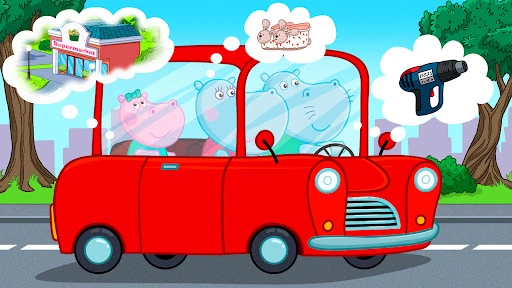
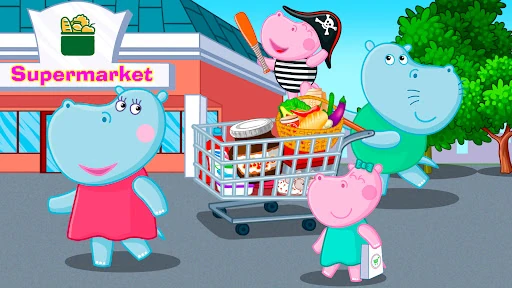
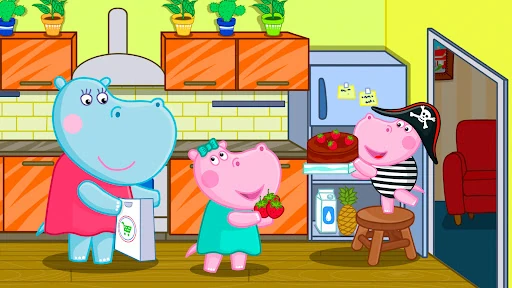
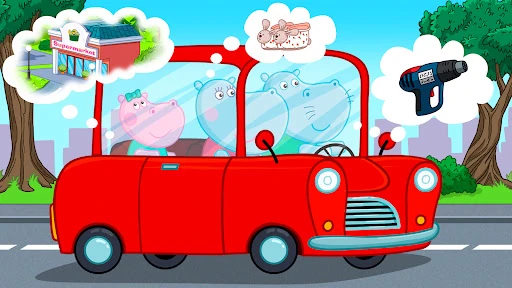
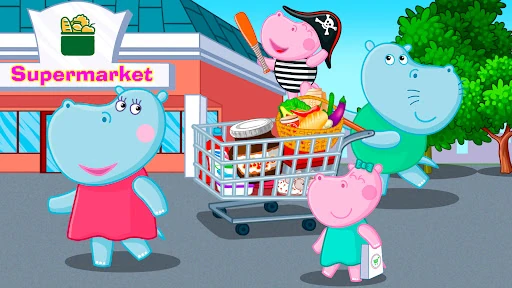
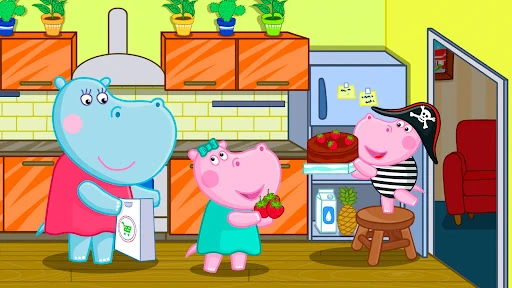
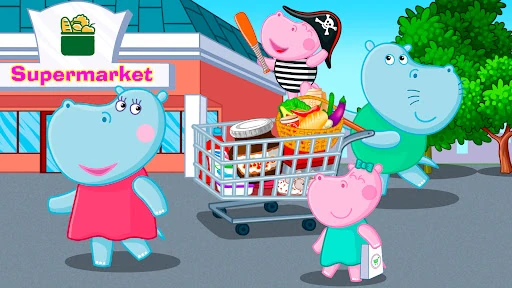
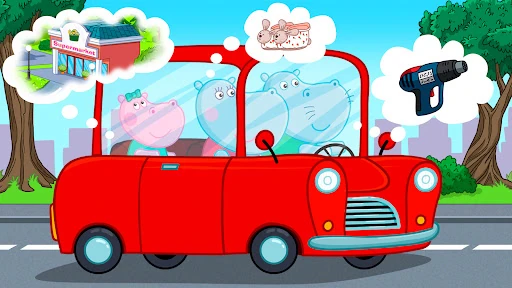
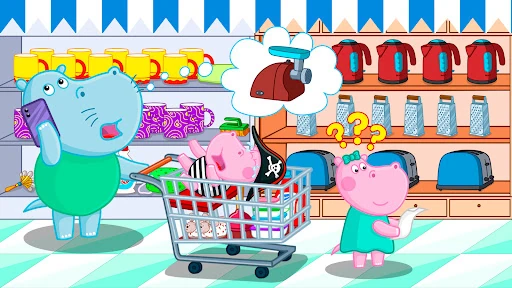
Supermarket: Shopping Games, developed by the prolific Hippo Kids Games, serves as a compelling entry in the Educational mobile sector. It successfully gamifies the mundane task of grocery shopping, transforming it into a multi-layered lesson in visual recognition, discipline, and basic arithmetic. By placing the player within a familiar family dynamic—tasked by "Mommy" and accompanied by "Daddy" and siblings—the app anchors its educational goals in a relatable real-world context. From a professional standpoint, it represents a well-executed example of "edutainment" that balances engagement with cognitive development, ensuring children learn critical life skills through interactive play.
🔍 Key Features Breakdown
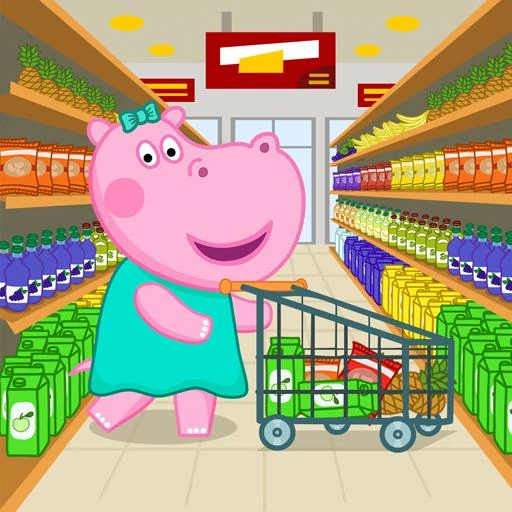
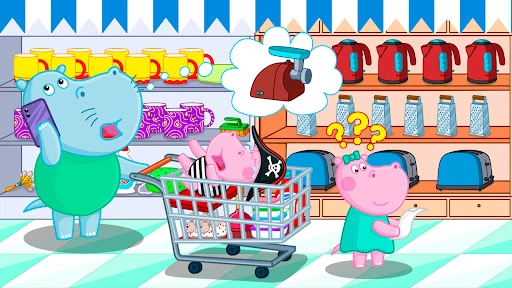
- Visual Recognition Lists: By displaying a required item list at the top of the screen, the game challenges children to match icons with 3D-style shelf items, sharpening their observation skills and attention to detail.
- Distraction Filtering Mechanic: The inclusion of "Daddy" and the "little brother" who add unauthorized items to the cart is a clever design choice. It teaches kids to remain focused on a specific goal and exercise impulse control.
- Financial Literacy Simulation: The transition to the cashier phase introduces the concept of transactions and money management, providing a foundational understanding of how commerce works in the real world.
- Diverse Vocabulary Building: With sections ranging from garden tools to apparel, the game exposes children to a wide variety of product categories, expanding their situational vocabulary.
🎨 User Experience & Design
The UI/UX design of Supermarket: Shopping Games is tailored specifically for the preschool and early elementary demographic. The interface utilizes high-contrast, colorful imagery that is immediately engaging. Navigation is simplified through intuitive drag-and-drop mechanics, which are essential for developing fine motor skills. The persistent visibility of the shopping list ensures that the user's objective is always clear, reducing the cognitive load that often leads to frustration in younger players. While the aesthetic is decidedly "cartoony," it maintains a clean layout that avoids the cluttered feel often found in lower-tier educational apps.
⚖️ Pros & Cons Analysis
- ✅ The Good: Strong focus on real-world applicable skills such as list-following and budget awareness.
- ✅ The Good: High engagement factor through the "5-star" reward system and family-centric storytelling.
- ❌ The Bad: The gameplay loop is highly repetitive, which may lead to diminishing interest for children on the upper end of the age bracket.
- ❌ The Bad: Limited customization options for the difficulty level or the shopping environment.
🛠️ Room for Improvement
To elevate the experience for the next version, the developers should consider integrating voice-over narrations for the shopping list items. This would provide significant support for pre-readers and enhance the auditory learning component. Additionally, introducing a "Free Play" mode where children can explore the supermarket without a list could encourage creative play and curiosity-driven exploration of the game's various environments.
🏁 Final Conclusion & Recommendation
Supermarket: Shopping Games is an excellent tool for parents and educators looking to introduce toddlers and preschoolers to the concepts of organization and commerce. Its blend of colorful visuals and structured tasks makes it a standout choice in the Educational category. We recommend this app for children aged 3 to 6 as a safe, entertaining, and mentally stimulating digital environment.